A 1991 54 passenger TC/2000 that’s a wheelchair bus.
1991 Blue Bird TC2000 School Bus(#112) (15-4626 KSD) GV (At Agency Location) – State of Washington Surplus Operations Surplus
Source: Public Surplus: Auction #1512101
A 1991 54 passenger TC/2000 that’s a wheelchair bus.
1991 Blue Bird TC2000 School Bus(#112) (15-4626 KSD) GV (At Agency Location) – State of Washington Surplus Operations Surplus
Source: Public Surplus: Auction #1512101
These pictures that I have posted of Kyrgyzstan and Xinjiang, China are like pictures that my paternal grandmother would have taken had she ever traveled to any of the Soviet Central Asian countries, to Xinjiang, China; or to the Gansu province in China-which neighbors the Xinjiang province to the East.
In contrast to the Xinjiang province, the Gansu province has a large concentration of ethnic Han Chinese, and much smaller concentrations of Hui, Dongxiang; and Tibetan people.
The Dongxiang people’s religion is also Islam. Unlike the Hui people, who are of mixed Han Chinese, Arabic, and Central Asian descent; the Dongxiang people are closely related to the Mongolian, Kalmyk/Oirat; and Buryat peoples.
Some scholars believe that the Dongfeng peoples’ identity as an independent ethnic group arose through contact with Central Asians, due to whom the Dongxiang converted to Sunni Islam in the 13th century. While other scholars believe that One possible origin is that they are descendants of Mongolian troops posted in the Hezhou area by Genghis Khan during his journey westward. Yet another possibility is that they could be a mixture of many peoples including Mongolian, Han, and Tibetan ethnic groups.
To the West and Northwest, the Xinjiang province in China borders Kazakhstan, Kyrgyzstan, Tajikistan; and Afghanistan. To the Southwest, the Xinjiang province in China borders Pakistan, India; and a disputed region of Aksai Chin. To the North, the Xinjiang province in China borders Russia, and to the South; Tibet. To the Northeast, the Xinjiang province in China borders Mongolia, as aforementioned-the Gansu province to the East; and the Qinghai province to the Southeast.
My paternal grandmother really would have likely traveled to places any of the Soviet Central Asian countries, to the Xinjiang province China; or to the Gansu province in China. She has already traveled to places such as Continental Europe, Japan; and Africa.
As I have mentioned in an earlier post, my paternal grandmother’s travels to Europe are how she could have likely ever met Rick Steves, and how them two could have become friends; with my paternal grandmother loving Rick as if he were her own son.
Rick might also travel to places such as the Soviet Central Asian countries, to the Xinjiang province China; or to the Gansu province in China.
My paternal grandmother has taken pictures like those taken in Kyrgyzstan and Xinjiang, China anywhere she has traveled around the world.
Places such as the Soviet Central Asian countries, to the Xinjiang province China; or to the Gansu province in China are of interest to people like myself, Ray, our friend Dennis, and Jan Pol-the veterinarian in Mid-Michigan; and we like to research these types of places.
Photos from the Xinjiang autonomous region in China, where there is a large concentration of Hui people.
Hui people are people of mixed ethnic Han Chinese and Arabic descent. They are direct descendants of Silk Road traders from Arabia who have traveled the Silk Road to trade with China. The Hui peoples’ ancestors are Arabic traders who have permanently settled in China.
Islam is the Hui peoples’ religion.
There’s also a large concentration of Uyghur people in Xinjiang, China.
Islam is also the Uyghur people’s religion.
Being in Xinjiang is just like being in any one of the 5 nations in Central Asia-such as Uzbekistan, Tajikistan; and Kyrgyzstan, to name a few.
Like how the former Soviet Central Asian nations have teahouses, Xinjiang does to.
Photos of people from the Tajik, Uzbek, and Kyrgyz minority populations in Xinjiang:
http://www.slideshare.net/cmfoo2988/china-ethnic-groups
Photos of ancient Tajik remains in Xinjiang:
Even in this area of China where it’s almost like being in Central Asian countries such as Uzbekistan and Tajikistan, the people and religion are Hui and Uyghur, and Islam; and not ethnic Han Chinese, Buddhism, and Taoism, and there is more writing in Arabic and in Persian than in Standard Chinese; there is still a statue of Chairman Mao just like how there are statues of Lenin and Stalin in the former Soviet Central Asian countries, throughout the entire nation of Russia; and in other former SSR nations such as the Ukraine and in Belarus.
Sadly, those pictures of destruction that you saw earlier in this post are not of a war zone, but of the historic old town being demolished in favor of the province becoming as modern, dynamic; and fluidic as the rest of China. UNESCO does not particularly favor the condemnation of the old town and the modernization of the town; the Hui and Uyghur people are not fond of it, but the Chinese government feels that it is necessary at all costs to keep every populated corner of the country as dynamic as possible so that China remains ahead of the curve as a world power.
As a consequence of the modernization of the town, the local culture may become extinct; and the Hui and Uyghur peoples’ own culture may also disappear.
Photos of the recently constructed new town:
I have a very keen interest in Turkmenistan, in addition to Uzbekistan, Tajikistan, Kyrgyzstan, Kazakhstan; and Turkmenistan because of these countries formerly being part of Imperial Russia and later by the Soviet Union, and these formerly being governed by Russia.
I think these countries in Central Asia should continue to be a part of Russia. At least the citizens of these countries still speak Russian during daily communication amongst each other.
Photo of Kyrgyz Police and guardsmen walking in true Soviet/Russian fashion-such as when Russia and many other former Soviet countries hold a ‘Changing Of The Guard’:
Statues of Lenin and Stalin are still present throughout Kyrgyzstan (a silver lining for yours truly) such as depicted in the pictures below:
Photos from the northern, totalitarian section of Korea.
The armistice at the conclusion of the Korean War was signed in July, 1953 by William Kelly Harrison, Jr.; which had resulted in the construction of the 20 mile-wide Demilitarized Zone (DMZ)
The Koreas were divided at the 38th parallel just before the outbreak of the Korean War in 1950.
The likelihood of the Kim family withdrawing from power, the cessation of the communist, totalitarian regime; and the reunification of both Koreas is dubious. It would be very nice, though; if the two Koreas ever reunite.
It would be wonderful if the northern, totalitarian section of Korea was taken over the southern, Democratic and non-totalitarian section of Korea.
North Korea remains under the influence under the Soviet Union, and stuck in the 1950’s. Personally, I’d rather that North Korea remained stuck in the 1970’s, 1980’s; or the 1990’s. North Korea’s government is modeled after that of the former Soviet Union.
Russia/Soviet Union provided the northern, totalitarian section of Korea with weapons, including the jet-powered MIG aircraft during the modern nation of North Korea’s early years in the 1950’s.
Like how the Soviets and East Germans did, the North Koreans exhibit propaganda paintings and posters at various sites all over the country.
North Korea’s human rights are worse than in the former East Germany/GDR, communist China, and also; Vietnam.
Portrait of Japanese girls of North Korean descent visiting their ancestral land:
North Korean Postal Service P.O Box:
Ugly hair on this young man listening to headphones connected to a boom box:
What seems to be, of all places; a Catholic church:
Outdoor changing room at the film studio in Pyongyang with little or no privacy:
Young Pioneers program modeled after the programs in Russia and other former Soviet countries:
North Korean propaganda posters and mosaics:
Site of a revolution against the Imperial Japanese in Chongbong, North Korea:
What appears to be a young North Korean solider at the Demilitarized Zone (DMZ):
A Russian UAZ Jeep-type vehicle in service with the North Korean military:
North Korea’s military also being modeled after the former Soviet Union, for instance; how their soldiers march:
A 1960’s Blue Bird All American situated next to a 1960’s Carpenter conventional style School Bus. Both are sitting in pasture and being used exclusively for parts storage.
Sadly, many junkyards buy retired School Buses to use strictly for parts storage. These vintage School Buses could instead be lovingly restored.
http://fc02.deviantart.net/fs70/i/2012/290/6/9/school__s_out_forever__by_swiftysgarage-d5i5089.jpg
A 1934 model year Wayne conventional style School Bus on a GM chassis & cowl.
Again, I would have this bus restored in a heartbeat as I prefer only vehicles in original or restored, like-new condition.
Historically, ABC had covered NASCAR only as a scaled-down and highly edited segment of Wide World Of Sports; because nobody thought that the entire nation would give a hoot about NASCAR.
Bill France Sr. was unhappy about ABC having aired his races strictly as scaled-down segments on Wide World Of Sports, and he wanted a television network to televise Flag-To-Flag coverage of his races. So CBS had promised to televise a couple races Flag-To-Flag, the 1979 Daytona 500 was helped in viewership by a major snowstorm that had occurred on the Eastern Seaboard; and the rest, they say, is history with regards to CBS’s legendary NASCAR coverage.
Roone Arledge, by this time during the years 1978-1979, having assumed the duties of being the head of both ABC’s news & sports departments; had pondered over giving ABC the chance to televise a NASCAR race Flag-To-Flag, and attempting to outbid CBS for the television rights to the Daytona 500. But once Roone Arledge had also become the head of ABC’s news department, the sports department was on his back burner; and he had pretty much left the sports department in the hands of the Vice President of ABC Sports, the person who is second-in-line of management. Because of this, Roone had wished that he had moved the sports department into the same building where the news department was based at the time so that he could have kept a closer eye on the sports department, and maybe, perhaps; outbidded CBS for the television rights to the Daytona 500.
But, it was meant to be in it’s entirety that CBS had their television rights to NASCAR for the next 21 years until 2000, and CBS had done a better job of televising a NASCAR race than ABC ever did. CBS had even won an Emmy for their telecast of the 1989 Daytona 500.
In 1984, the independent ABC, just before both the television network and the cable channel were about to be acquired by Capital Cities Communications; had purchased ESPN.
Any Flag-To-Flag coverage of a NASCAR race that ABC had aired ever since they had acquired ESPN was likely produced wholly by ESPN and aired on ABC in lieu of the cable channel, per the conditions of the contract for the television rights. Ever since the 1972 Greenville 200, ABC had never fully produced a single NASCAR race with Flag-To-Flag coverage, it was always done wholly by ESPN by the time Flag-To-Flag coverage of a NASCAR race had come along.
Video of the 1987 Motorcraft 500 at Atlanta International Speedway that had aired on ABC:
Videos of former WXYZ-TV anchor Solon Gray, who had worked at WXYZ-TV during their breakthrough coverage of the 1967 Detroit riots that had earned WXYZ-TV respect among the viewing public and in the broadcasting industry as a whole; when he had later worked at KIRO-TV in Seattle, then at WSVN-TV at Miami, and even later at WTVJ-TV in Miami.
Video of Solon Gray reporting next to a Ford C-Series Medium-Duty truck while working at KIRO-TV:

Become a paid subscriber to get access to the rest of this post and other exclusive content.
Episode of the CBS News program 48 Hours from January, 1989 about a scenario that takes place in Detroit.
This was during a better time of CBS news (albeit the corporate takeovers and cutbacks in the news department) when compared to now, and a better time for CBS overall.
This was also a better time for CBS Sports as well. Neal Pilson was still at the helm of CBS Sports as of this time.
The ex-Storer stations (having been acceded to KKR in a hostile takeover just a few years earlier in 1986) were still CBS affiliates as of this time.
This is how CBS News remains forevermore in “Early Life And Continuous Livelihood”.
Become a paid subscriber to get access to the rest of this post and other exclusive content.
I never knew that Studebaker ever made a Medium-Duty School Bus chassis & cowl.
I knew they had a commercial and military vehicle division that had produced the ZipVan for the U.S Postal Service and the M38 truck.
Photos of vintage School Buses on a Studebaker chassis & cowl:
http://pre07.deviantart.net/eea5/th/pre/i/2012/006/8/2/studebaker_school_bus_by_skoshi8-d4lixqw.jpg
A 1940’s Blue Bird conventional style Scool Bus on a Studebaker chassis & cowl. I would have this bus restored immediately, as I loathe the rat-rod look, and prefer vehicles in original, like-new condition.
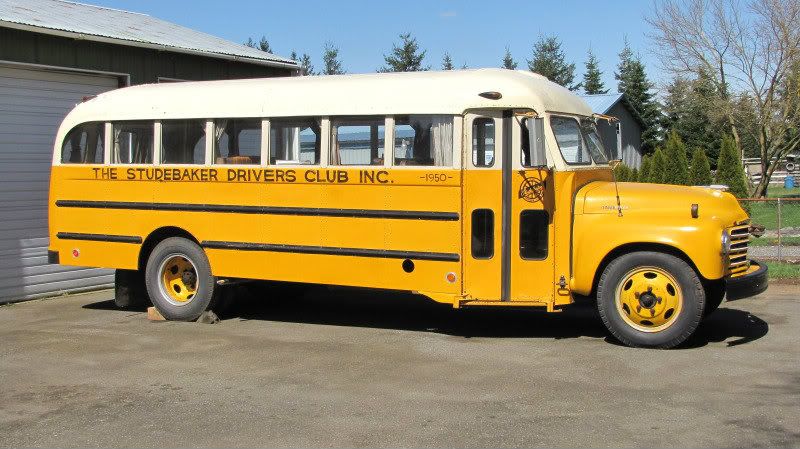
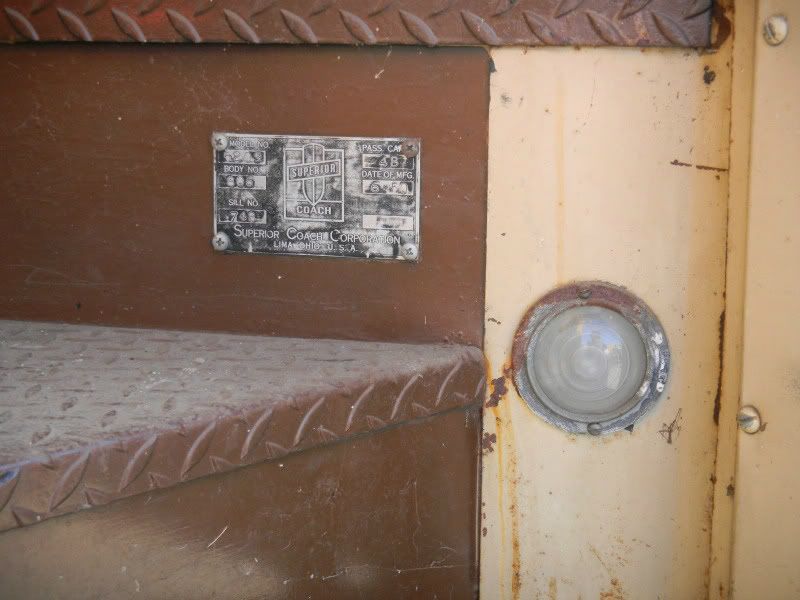
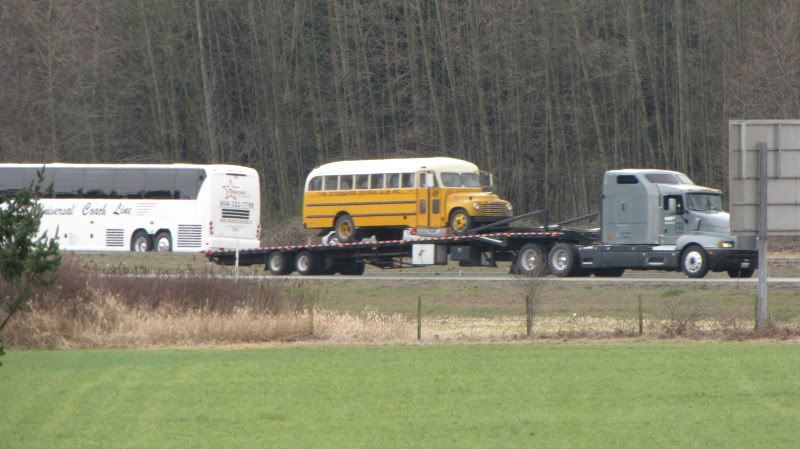
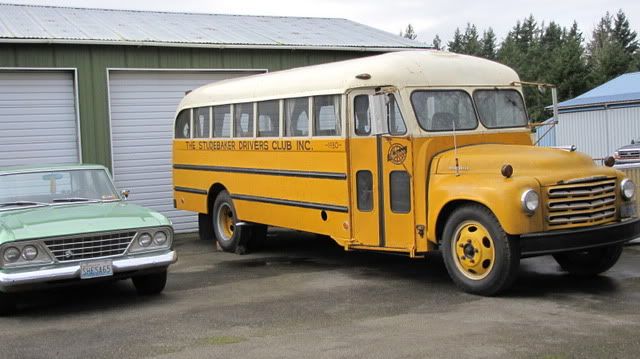
A 1950 Studebaker conventional style School Bus on a Studebaker chassis & cowl:
http://i175.photobucket.com/albums/w143/StudeDave/My%20Rides/1950%20StudeBus/IMG_1463.jpg
http://i175.photobucket.com/albums/w143/StudeDave/My%20Rides/1950%20StudeBus/insidesteps.jpg
http://i175.photobucket.com/albums/w143/StudeDave/My%20Rides/1950%20StudeBus/IMG_1346.jpg
http://i175.photobucket.com/albums/w143/StudeDave/My%20Rides/1950%20StudeBus/IMG_1388.jpg
A 1948 Superior conventional style School Bus on a Studebaker chassis & cowl:
http://i132.photobucket.com/albums/q26/clarknovak/misc/18a6_3.jpg
 Matthew Parij